Karst Rock Weathering of The Great Pyramid of Giza
DOI:
https://doi.org/10.3986/ac.v54i1.14332Keywords:
carbonate rock, rock relief, complexometry, Great Pyramid of Giza, EgyptAbstract
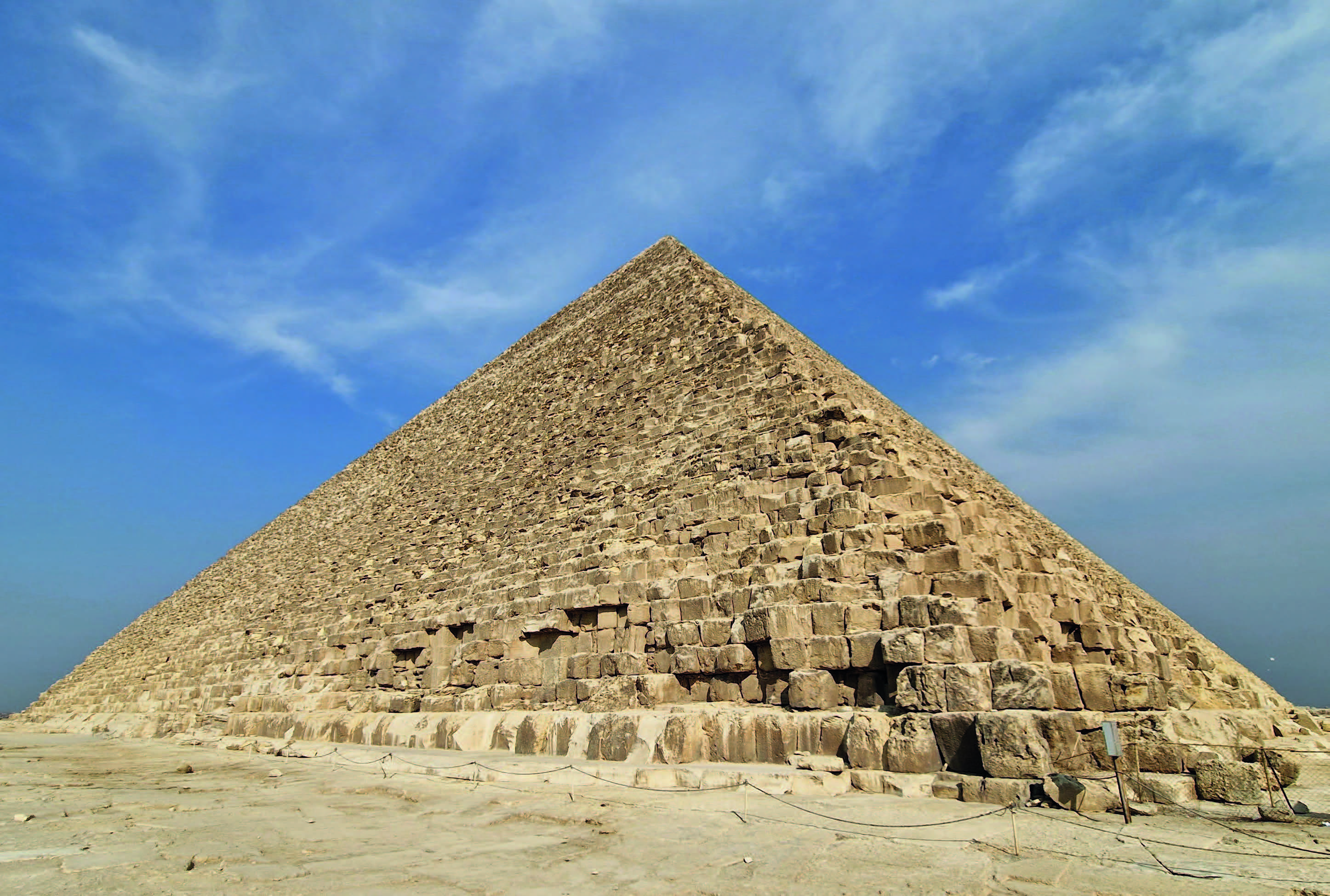
The exposed stone blocks of soft carbonate rock, from which the pyramid is built, quickly develop a distinctive form and rock relief. The outer parts of the blocks are often undercut into overhangs. On their upper parts, a protective crust forms through rock dissolution and rapid recrystallization under the influence of occasional rain and seeping water, shielding the rock from wind erosion and dissolution. This crust, in turn, is dotted by small pits, whose bare surfaces remain exposed to wind erosion, allowing them to expand and grow deeper. In the lower sections, where the rock is fully exposed, wind erosion primarily carves out larger cups and channels. A thin crust may occasionally form over these sections, but tends to flake off quickly. This process suggests rapid karstification and the ongoing disintegration of the stone blocks.
Downloads
Downloads
Published
How to Cite
Issue
Section
License

This work is licensed under a Creative Commons Attribution 4.0 International License.
Authors guarantee that the work is their own original creation and does not infringe any statutory or common-law copyright or any proprietary right of any third party. In case of claims by third parties, authors commit their self to defend the interests of the publisher, and shall cover any potential costs.
More in: Submission chapter